Showing posts with label Farmers' markets. Show all posts

Saturday, July 2, 2011

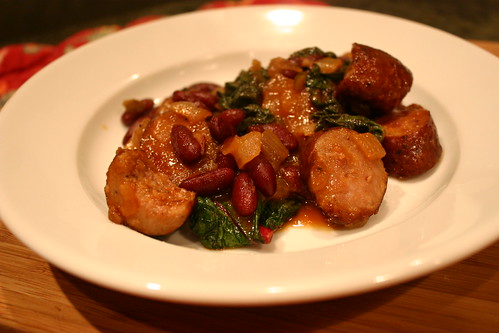
CSAs and Chard Fatigue: Franks, Beans & Greens

001

While many of you around the country are enjoying early Summer produce, we Chicagoans are still seeing Spring's greens in our CSA box, lots and lots of greens.

With a little oil, salt, and a warm oven, I can transform the kale into crispy little bites. Chard, on the other hand, has begun to outlive its utility. Unlike its fairer cousin spinach, I don't like to freeze excess chard. To me, it only intensifies the bitterness.

Instead, I've been tucking the Alpine green in stews, both meatless and meaty. Last week's creation was so well received at my family's table that I reprised it again this week. If you too have an excess of the red tinged green, try this family favorite.

Franks, Beans and Greens

Serves 4

1 onion, diced
1/2 garlic scape, sliced
1 tablespoon sunflower oil
1/4 cup white wine
3 tablespoons light brown sugar
1 tablespoon maple syrup
1/4 cup ketchup
1/2 teaspoon Dijon mustard
1/2 teaspoon Worcestire sauce
Pinches of cloves and cinnamon
1 12 ounce kielbasa, sliced
1 can kidney beans, drained and rinsed
1 small bunch Swiss chard, rinsed, stemmed and roughly chopped

Heat the oil in a medium saucepan over medium heat. Add onion and scapes and cook until the onions are caramelized about 7 or so minutes. Pour in white wine and cook until reduced. Add sugar, maple syrup, ketchup, mustard, Worcestire sauce, cloves and cinnamon. Turn off the heat. Brown the kielbasa in a large skillet over high heat. Add the kielbasa, beans and chard to the saucepan. Cover and cook until the chard is wilted and the ingredients are hot. Serve.

Wednesday, April 13, 2011

Crowd Sourcing Wonderful Watermelon Recipes

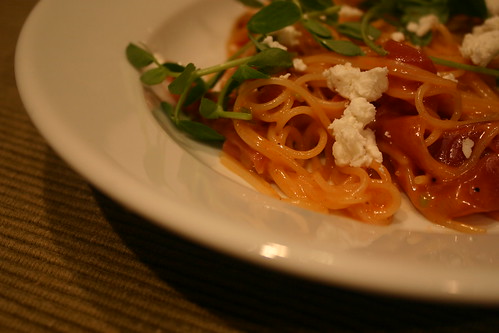
Watermelon pasta

Watermelon? you say.

Yes, I know, watermelon are months away from our farm stands and markets. But during last year's season, I had a lot of it. This may sound like an embarrassment of riches to you (and to me during these cool days of early Spring), however, in September, I was doing whatever I could to avoid throwing away the weekly supply of mottled green orbs I found in my CSA box. Procrastinator that I am, I pureed and froze cups and cups of the stuff.

As I sorted recently through my freezer to make room for the new growing season, I came across my six mason jars filled with coral colored liquid. Now, what to do with it? I brought my question to the crowd.

On Twitter, I relayed my dilemma. I explained that we don't eat too many desserts, nor do we drink cocktails often. Therefore, sorbet and margarita were off the table.

Two suggestions stood out. From a grower and seller of many watermelon came the idea of jelly. The second was a pasta sauce.

In two days, I've depleted my supply and crowd sourced two new magnificent recipes.

Cappelini with Watermelon, Prosciutto and Goat Cheese
Serves 2

2 cups pureed and strained watermelon puree
1 tablespoon unsalted butter
1 tablespoon all-purpose flour
3 green onions, whites finely chopped, 1 inch of the greens finely sliced
2 tablespoons heavy cream
freshly ground pepper and kosher salt to taste
3 slices prosciutto, thinly sliced
1 ounce goat cheese
1/3 cup pea greens
1/4 pound cappelini

Pour the puree into a small saucepan and bring to a boil. Reduce the liquid to about 1/3 cup. Strain the reduction into a small bowl. Bring a large pot of salted water to a boil. Once boiling, add the cappelini to the pot and cook according to the package. Heat the butter in a small saucepan over medium heat. Add the whites of the onions and cook until softened. Whisk in the flour and cook for about a minute. Whisk in the reduced watermelon juice until the sauce seems slightly viscous and thickened. Stir in the cream and season with salt and pepper. Drain the pasta, add the prosciutto and coating all of the strands of the pasta with the sauce. Scoop the sauced pasta onto plates or shallow bowls. Sprinkle on the goat cheese, scallion greens and pea greens. Serve immediately.

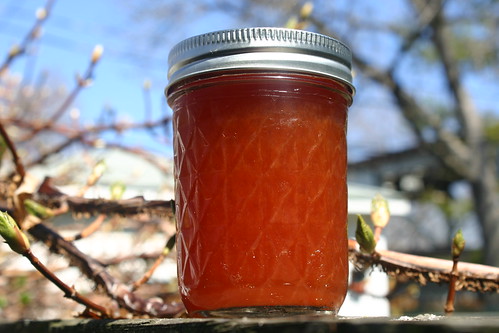
watermelon jelly

Watermelon-Basil Jelly

2 cups watermelon puree
1 3/4 cup granulated sugar
1 package liquid pectin
3 basil stems

Whisk the first three ingredients in a large saucepan over medium heat. Add the basil stems. Turn the heat to medium high and bring the watermelon to a boil. Cook until the mixture is thickened and reaches 200 F. Remove the basil stems and pour the jelly into hot sterilized jars. Cool to room temperature and store in a dark place until ready to use.

Monday, May 24, 2010

A Farmers' Market Cure for Picky Eaters


Blessed is the parent whose child skips the picky eating stage.

I had prematurely counted myself among this kind when my 1½ half year old son was happily chomping down whatever I’d place in front of him. Never would I have to suffer through the kids’ menus, the freezer packs of chicken nuggets, the plates of plain buttered noodles. I was convinced that we were somehow different. How wrong I was.

To read more, click here to enter the Dupage Mamas site.

Friday, August 21, 2009

Sody Pop, Watch it Fizz

Soda has always been an Achilles heel of mine. As a child, I could hardly resist the full flavored spiciness of a Coca Cola. As I grew older and became weight-conscious, I learned to like Diet Coke. Even as my diet became more and more local, I still couldn't kick the Diet Coke habit. And then there was the resulting waste. I was no fan of the 2 liter bottles, only virgin aluminum cans kept the fizz adequately. For these reasons, I'm happy to report that I'm Diet Coke free for two months now.

Back in May, I ran into the Soda Stream folks at Green Fest. I picked up a coupon, while my assistant bought the floor model. After hearing him rave about it for months, I broke down and bought one.

Soda Stream makes a variety of soda makers and mixes. It uses a single carbonator, which makes about 110 1 liter bottles. The Fountain Jet, the Genesis and the Pure use BPA-free plastic bottles, while the more expensive Penguin uses glass carafes.

Soda Stream makes a number of mixes to add to the soda water. The diet cola is a pretty good substitute to my ordinary poison. The sodas on my machine are stored in the plastic bottle used to make the soda water, so like other plastic bottles, the fizz lessons, but it’s a small sacrifice for lessening my aluminum habit. Plus, there’s a stainless steel container, which hopefully will do the trick.

My only disappointment was the full-cal flavors. The regular flavors are sweetened with a mixture of sugar and Splenda, which while reduces calories, provides that artificial flavor. Yes, yes, I know if I drink Diet Coke, aren’t I used to it? Indeed. However, when giving my son a special treat of homemade soda, I would prefer that it doesn’t include artificial sweeteners.

And then it dawned on me, I don’t need no stinkin’ mixes. With all the beautiful fruits that are coming to the farmers' market these days, all I need is fruit puree, organic sugar syrup and a bit of imagination.

The following are recipes for some of the concoctions I've made thus far.

Sparkling Raspberry Lime-Aid
Serves 1

You can also make Minted Sparkling Raspberry Lemon-Aid by substituting 1 tablespoon lemon juice for the lime juice and uses minted sugar syrup instead of plain.

1 tablespoon raspberry puree made by pushing the raspberries through a fine mesh strainer
Juice of ½ lime
2 teaspoons sugar syrup (recipe to follow) or to taste
soda water to cover
ice

Mix the ingredients and enjoy in a tall glass


Sugar Syrup
Makes approximately 2 cups

1 cup organic sugar
1 cup water

Combine the sugar and water in a small saucepan. Cook over medium heat until the sugar has dissolved. Cool.

Variation: Add ½ cup roughly chopped mint to the sugar and water. Strain when the sugar has dissolved.


Blueberry Lemon Soda

2 cups fresh or frozen blueberries
1-inch piece of lemon zest
1/4 cup organic sugar
lemon juice
soda water to cover
ice

Cook the blueberries with the lemon, sugar and water to cover by 1/2 inch until the blueberries have softened. Puree in a food processor and push through a fine mesh strainer. Cool. Once cooled, mix 1/4 cup of blueberry syrup with 1 teaspoon lemon juice with ice and sparkling water to cover.

Monday, August 17, 2009

Why Local?

My proudest moment as a chef/mom/food educator was relayed to me second hand. While perusing the produce aisles of the supermarket in late February, my mother asked my 4-year old son if he wanted strawberries. Declining, he said to my mother quizzically and yet emphatically, “Grandma, we can’t buy strawberries now, they’re not in season.”

When too many kids are eating far less than the recommended daily allotment of fruits or vegetables, why worry about whether the fruits and vegetables that they do eat are in season or worse locally grown? If you’re living or working in one the country’s food deserts, where the closest thing that you’ve got to a grocery store is a bodega that stocks more varieties of Cheetos than fruits, this is not likely to be your main concern.

How about the rest of us? Is it really that much of a struggle to pass by the California-grown strawberries in June or the Mexican-raised tomatoes in August? Locally grown, seasonal produce is all around us. Even Wal-Mart has even begun to source locally or at least regionally. But before I get into the where, I want to talk about the why. Here are my top three reasons for introducing locally-grown, seasonal foods into your child’s diet.

It tastes better. I started eating locally not for ideological reasons, but because it tastes better. If you’ve ever eaten a pea off of the vine or sweet baby greens picked in the morning and served on the table in the evening, you know what I mean. And strawberries, sweet Illinois strawberries. The white-hearted California berries bred for shipping have nothing on our tiny, ruby-like orbs that soar with flavor. If you want your child to have a lasting love for fruits and vegetables, give him ones that are full of flavor. Seriously, who could love starchy peas or wilted salad greens?

It’s better for the environment. A small caveat on this statement, even taking into account food miles (i.e. the distance your food travels from farm to fork), just because food is grown within a certain distance from your home does not intrinsically make it better for the environment. However, many local farmers who sell to consumers at farmers' markets are small family farmers that tend their soil in a responsible manner often using organic methods even when they are not USDA certified as such (the little “o” versus the big “O”). How do you know the difference? The best way is to talk with the farmer and ask about their pest management systems and how they fertilize their soil. If, however, you don’t have the time or the inclination to do so, at the end of this post, I list markets and retailers that focus on locally grown, seasonal and sustainable produce that do the vetting for you.

It can forge a lasting connection between your child and the earth. I believe that connecting your child with the people who grow the food and the growing cycle creates a deeper respect for the food that they eat and for the earth. It was recently reported that America throws out 30% of the food raised in this country, a despicable fact given the rise in malnutrition and hunger on the planet. I have found that children who understand where their food comes from are less likely to waste it. My son knows that his apples come from Farmer Pete and his carrots from Miss Beth. He says “cheese please” to the cheese guys and knows that the good milk comes from the market in glass bottles. And the growing cycle, well, suffice to say, he’s pretty excited when June’s strawberries arrive.

Locally-grown, seasonal and sustainable produce is available from May through October at the City of Chicago’s farmers markets and year round at Green City Market (check the website for days and times), Green Grocer Chicago and Irv & Shelly’s Fresh Picks. Many of the Whole Foods in Chicago carry locally-produced items as well.

A final note, I’m actually not throwing my mother under the bus. My son and she were in Florida at the time of their conversation in the produce section where the strawberries in question were in fact in season.

Welcome

At five, my son Thor is already an old hand at navigating the farmers’ markets. His first visit was before six months. At two, his mid-morning Saturday nap was spent in the stroller at Chicago’s Green City Market, where the non-profit that I founded, Purple Asparagus, was running its kids program. Our weekly, sometimes bi-weekly, visits have created so many wonderful memories, including trying his first strawberry plucked straight out of a pristine pile by the farmer, or his market play dates with the daughter of another farmer who lives in the same small Indiana town as my husband’s relatives. Through these experiences, I’ve learned that the reward for our market visits was not simply getting the freshest and best tasting ingredients, but also forging a deeper connection between the food that we ate and the people who produced it.

Whether seasonal or year-round, seven days a week or weekly affairs, farmers' markets are appearing in towns and cities all over America. Although the market was once a primary means of food distribution, in the last century, Americans got lost in the not-so-supermarket with its shrink-wrapped meats and out-of-season produce. For those who care about good food, the surging popularity of farmers' markets is a cause for great celebration.

Farmers' markets are the perfect vehicle for getting families back to the table, connecting with one another and with the earth. Visits to the market are a fun and easy way to connect children with the source of their food, get them back in rhythm of the seasons, create a sense of community and develop in them a respect for farmers and producers and the food that they sell.

With this blog, I hope to help families develop this meaningful connection with their food, helping them get their children in tune with the rhythm of the seasons and creating lasting traditions through visits to the farmers’ markets.

Food isn’t simply a source of nutrition, but it is also a form of nourishment for heart, body and mind. By sharing food, we can create bonds that transcend age, race and gender. By using foods from the farmers' market and buying directly from the farmers themselves, we can create a bond not just between the people with whom we share our food, but with the people who produce it and the earth itself.
 
blog design by brooksiedesign